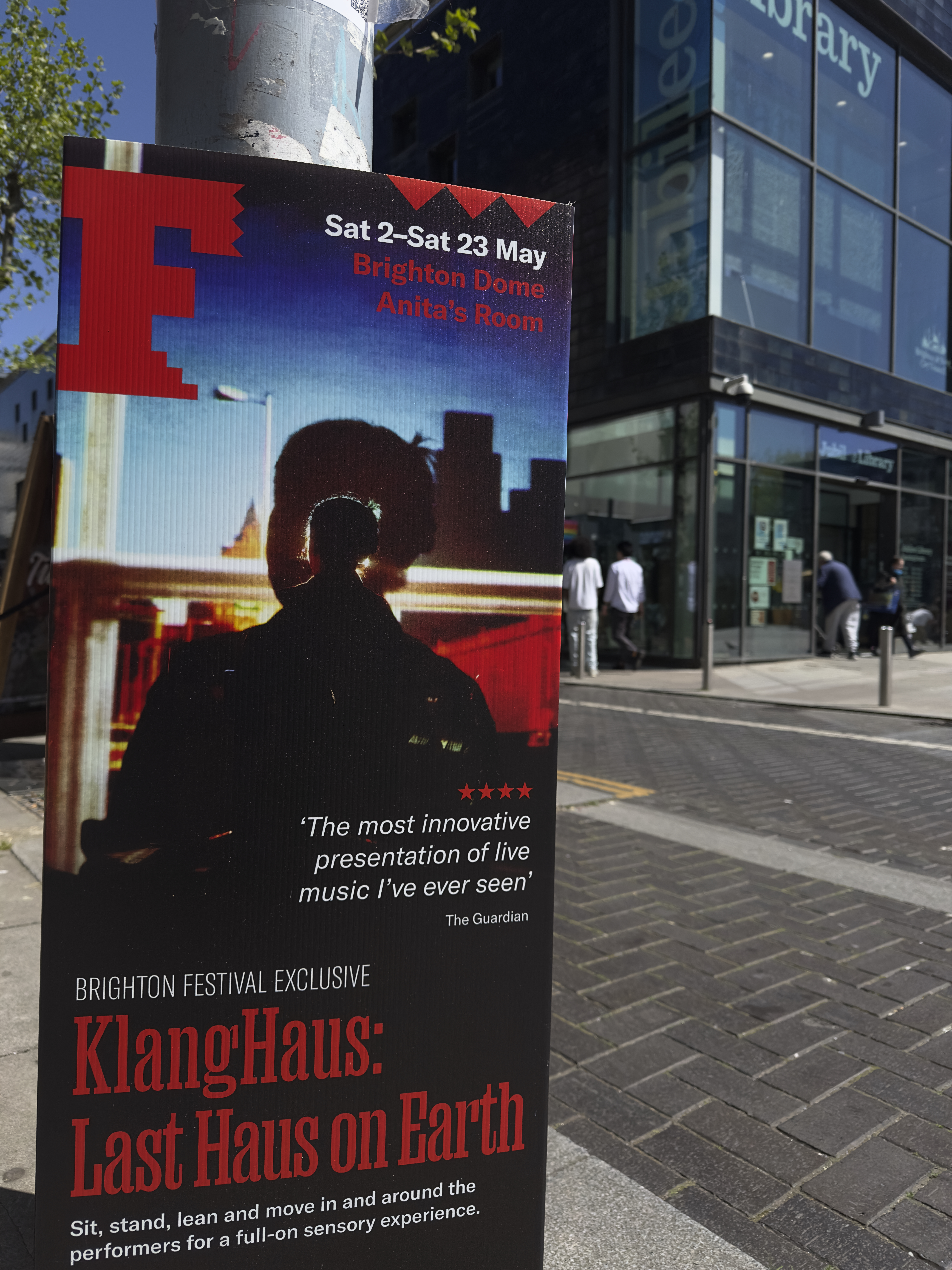
KlangHaus did it! 97 shows delivered with gusto and excellence. At times performing in 30 degree heat. We walk away with full hearts and invites from academics and a food charity to explore new projects, Brighton Festival have invited us to return and we have hopes for something extraordinary to emerge with Manchester International Festival. The work is never over, following threads of interest and conversation….but for now the Klangers will rest for a couple of weeks as rest and recouperation is the best food for new energy and the sparks of fresh ideas….whoooooop!zzzzzzzzzzzzz
The Stage review:
Art collective KlangHaus reflect our world back at us in an intriguing rush of music, sound and imagery
Cross-art collective KlangHaus bring two pieces to this year’s Brighton Festival, showcasing their beguiling blend of
live music, dreamy audiovisuals and playful social commentary. They’re there to be soaked up.
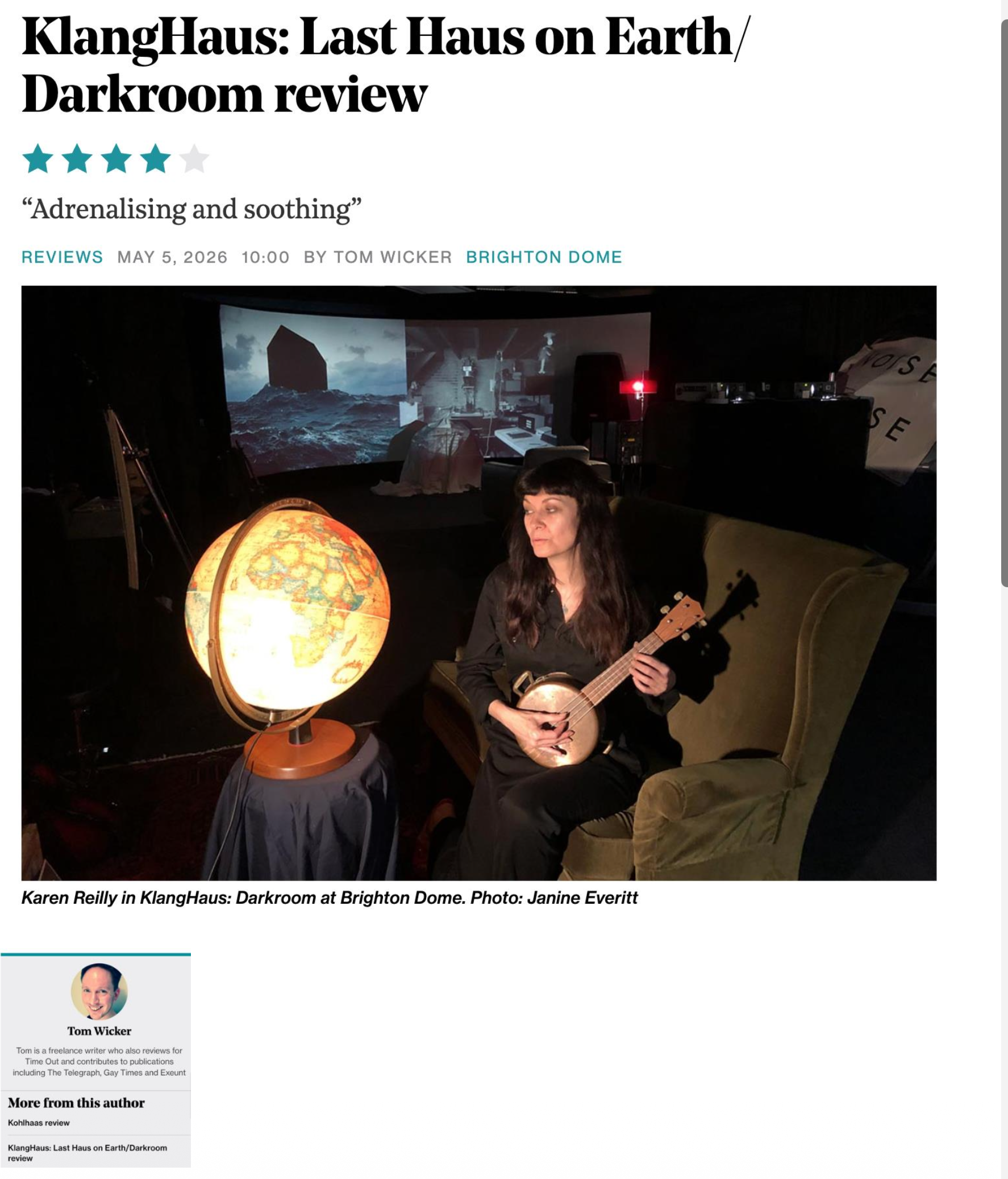
The immersive Last Haus on Earth takes place in a room at the top of the Brighton Dome. It’s an eclectically
disordered performance space, a curiosity shop of ill-matching chairs and trinkets. As audiences and gig-goers, we
slot ourselves around The Neutrinos, the Norfolk-based art-rock band who co-founded KlangHaus with artist Sal
Pittman. We’re spectators but also part of the show’s contours.
Pittman’s distinctive graphic art designs and video compositions are projected – almost splayed – across walls and
diagonally bisect the room on a sail-like canvas. They are a restless kaleidoscope of pop-art landscapes, ceaseless
city activity and close-ups of nature. Like the music, they spike between adrenalising and soothing, gesturing at the
sensory overload of our times.
Lead singer Karen Reilly sets the tone, her voice shifting between Chrissie Hynde and an almost nostalgic softness
as she moves between us, as if feeling every beat played. Guitarist Mark Howe, wry but welcoming, is the easy-
rolling showman of this travelling troupe of folky minstrels, with their intriguingly inscrutable joyfulness at being
here.
The music and the video projections play in lockstep, deliberately taking us to the edge of discordancy, as the songs
swing between rabble-rousing and wistful choruses about the ghosts that haunt our homes and lives. The
experience washes over and sometimes engulfs us.
The slight awkwardness of the physical space sometimes makes it difficult to lose yourself in the experience, as
much as there’s something great about being sat right next to drummer Jørund Mannsåker-Gundersen. The tonal
jumble of the playlist, while unpredictable, can also result in the hour veering from playfully free-form to shapeless.
The shorter, sharper Darkroom is the more successful. Inspired by the climate crisis and originally performed at
COP26 in Glasgow, it’s been revamped for the Brighton Festival. Gone are the frenetic audio-visuals. Instead,
audiences of just six people, seated in the same set as Last Haus on Earth, are plunged into darkness.
Our senses are narrowed down to Jon Baker’s sound design, which pushes us to our limits with the deafening and
panic-inducing screech of machinery. There are optional ear defenders and when the pit of your stomach is
juddering at a primal level at the shriek of our environmental impact, it’s hard not to reach for them. Viscerally
effective, it conveys far more than words.
But there’s also hope – in the gradual change to the sounds of birds in the sky, of waves and of walking on leaves or
pebbles. The descending hush and sense of calm feels like a reprieve. And you welcome it profoundly.

